
Palladium-Plated Copper Wire
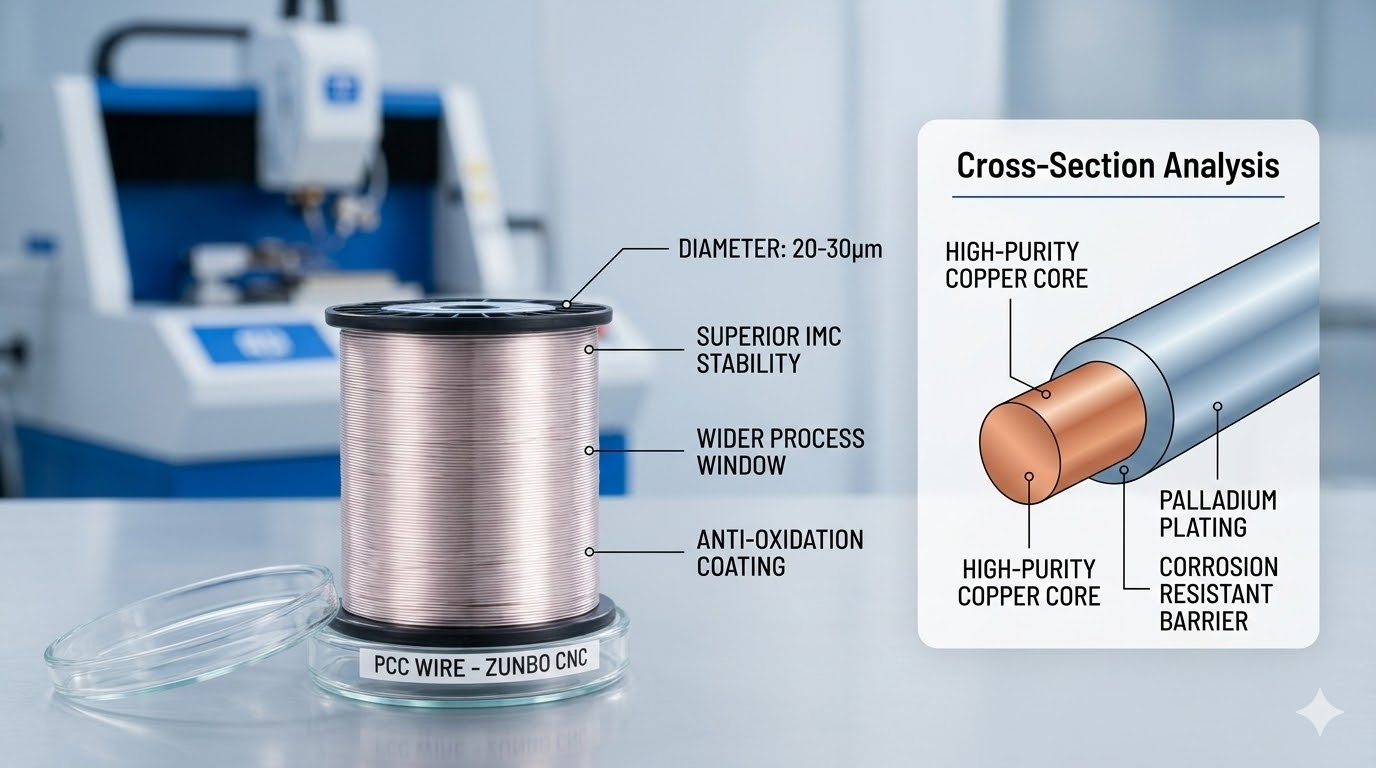
The superior performance of Palladium-Plated Copper Wire (PCC) stems from its high-purity copper core and precision palladium-plated architecture. This combination ensures exceptional mechanical strength and loop stability to resist mold-sweep pressure, while the palladium barrier provides outstanding chemical stability and interface reliability. By retarding intermetallic compound (IMC) growth and preventing oxidative corrosion, PCC delivers high-performance electrical connectivity and gold-like reliability at a significantly optimized cost.
Request a Quote
Take the next step to forging your path to success. Request a quote from our team.
Quality Assurance
Ensuring that our processes and products meet international quality and safety requirements.
Feature
| Feature | Technical Description | Competitive Advantage |
| Bimetallic Architecture | High-purity 4N/5N Copper core with a uniform Palladium (Pd) coating ($50\text{–}100\text{ nm}$). | Combines the high conductivity of Copper with the chemical stability of Palladium. |
| Anti-Oxidation Barrier | The Palladium layer prevents the Copper core from reacting with oxygen and humidity. | 6–12 Month Shelf Life; Reduces the risk of “Non-Stick on Pad” (NSOP) during bonding. |
| Superior Loop Stability | Inherits the high tensile strength and stiffness (Young’s Modulus) of Copper. | Mold-Sweep Resistance; Maintains precise loop profiles in high-density or long-span packaging. |
| IMC Reliability | The Pd layer retards the intermetallic compound (IMC) growth at the Cu-Al interface. | High-Temp Stability; Prevents Kirkendall voiding during HTSL (High-Temperature Storage Life) tests. |
| Optimized Ball Hardness | Controlled Pd-alloying during FAB (Free Air Ball) formation stabilizes ball hardness. | Pad Protection; Offers a wider process window than bare copper to prevent pad cratering. |
| Enhanced Stitch Bond | The Pd coating improves the wetting and adhesion of the second bond (stitch). | Consistent Connectivity; Ensures higher pull-test values and overall bond-point integrity. |
| Extreme Cost-Efficiency | A high-performance replacement for 4N/5N Gold (Au) wire. | 80%–90% Cost Savings; Provides gold-like reliability at a fraction of the precious metal price. |
Explore OurPalladium-Plated Copper Wire
| Series Type | Diameter Range (μm) | Targeted Applications | Selection Priority | Recommended Spool Size |
| Fine-Pitch Series | 18μm – 20μm | Smart Cards, High-Density Logic ICs, BGA Packaging | Maximum wire-sweep resistance for ultra-fine spacing (pitch < 50μm). | 2-inch / 4-inch |
| Standard Logic | 23μm – 28μm | Microcontrollers (MCU), Consumer Electronics, Memory Chips | Optimized balance of cost, conductivity, and bonding throughput. | 2-inch / 4-inch |
| Industrial / Power | 30μm – 38μm | MOSFETs, IGBT Modules, Power Management ICs | High current-carrying capacity and superior thermal dissipation. | 4-inch / 6-inch |
| Automotive Grade | 25μm – 33μm | Infotainment, Sensors, Non-Safety Critical ECU Modules | Maximum IMC stability for long-term reliability in high-heat environments. | 2-inch / 4-inch |
| High-Load Power | 40μm – 50μm+ | Discrete Power Components, Rectifiers, Heavy-Duty Modules | Lowest electrical resistance; replaces heavy gold wire in power modules. | 6-inch / 8-inch |
Palladium-Plated Copper Wire – Buyer FAQs
What is the primary benefit of PCC over bare copper wire?
The Palladium (Pd) coating acts as a protective barrier that prevents the copper core from oxidizing. This results in a much wider process window, superior stitch bond reliability, and a significantly longer shelf life (6–12 months).
Can PCC truly replace Gold (Au) wire in high-reliability applications?
Yes. PCC has become the industry standard for replacing gold in automotive (non-safety critical), industrial, and consumer ICs. The Pd-layer stabilizes the IMC (Intermetallic Compound), preventing the “Kirkendall effect” (voiding) at high temperatures.
Do I need to change my bonding machines to use PCC?
No. PCC is compatible with most modern high-speed automatic ball bonders (e.g., K&S, ASM). However, you must install a gas delivery system (EFO kit) to provide a shielding gas during ball formation.
What type of shielding gas is required for PCC?
Forming Gas (95% $N_2$ / 5% $H_2$) is highly recommended. The hydrogen acts as a reducing agent to ensure a perfectly spherical, oxide-free Free Air Ball (FAB), which is critical for consistent bonding.
How does the hardness of PCC compare to Gold wire?
PCC is slightly harder than Gold but softer than bare Copper. Our specialized annealing process ensures that the FAB hardness is optimized to prevent Pad Cratering while maintaining enough stiffness to resist wire sweep.

Advantages
The superior performance of Bare Copper Wire stems from its high-purity metallic properties and precisely controlled crystalline architecture. This combination ensures exceptional electrical conductivity and thermal dissipation to minimize internal resistance, while its high-modulus characteristic provides the structural rigidity needed to resist wire-sweep during molding. By forming high-strength intermetallic compounds (IMC) through optimized grain structures, Bare Copper delivers superior interface bond strength and significant cost-efficiency for high-speed semiconductor packaging.
High-Precision Drawing & In-line Annealing Process
This manufacturing process utilizes a high-precision multi-stage drawing method, uniformly reducing the diameter of 4N/5N high-purity copper rods through diamond dies. After precise structural elongation and controlled in-line annealing, the wire is stabilized in a vacuum furnace at optimized temperatures, causing the copper grains to recrystallize into a uniform equiaxed structure, forming a robust, high-conductivity electrical connection path.
These cost-saving advantages, combined with superior electrical conductivity, can mean better production rates and higher efficiency for your semiconductor operations. When you succeed, we know we've succeeded.
Research
"Our R&D focuses on micro-alloying and multi-layer composite coating designs to overcome copper’s inherent hardness and oxidation, achieving bonding reliability that rivals gold wire."
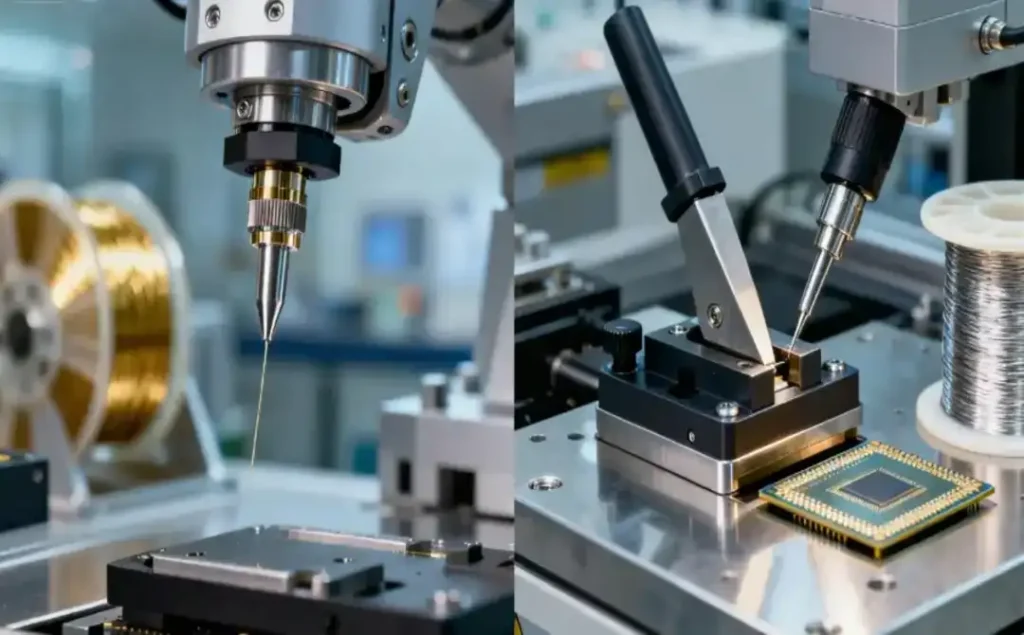
Experiment
"Through rigorous uHAST (Highly Accelerated Stress Test) and microscopic interface analysis, we quantify bond-point consistency and long-term stability under extreme high-temperature and high-humidity environments."
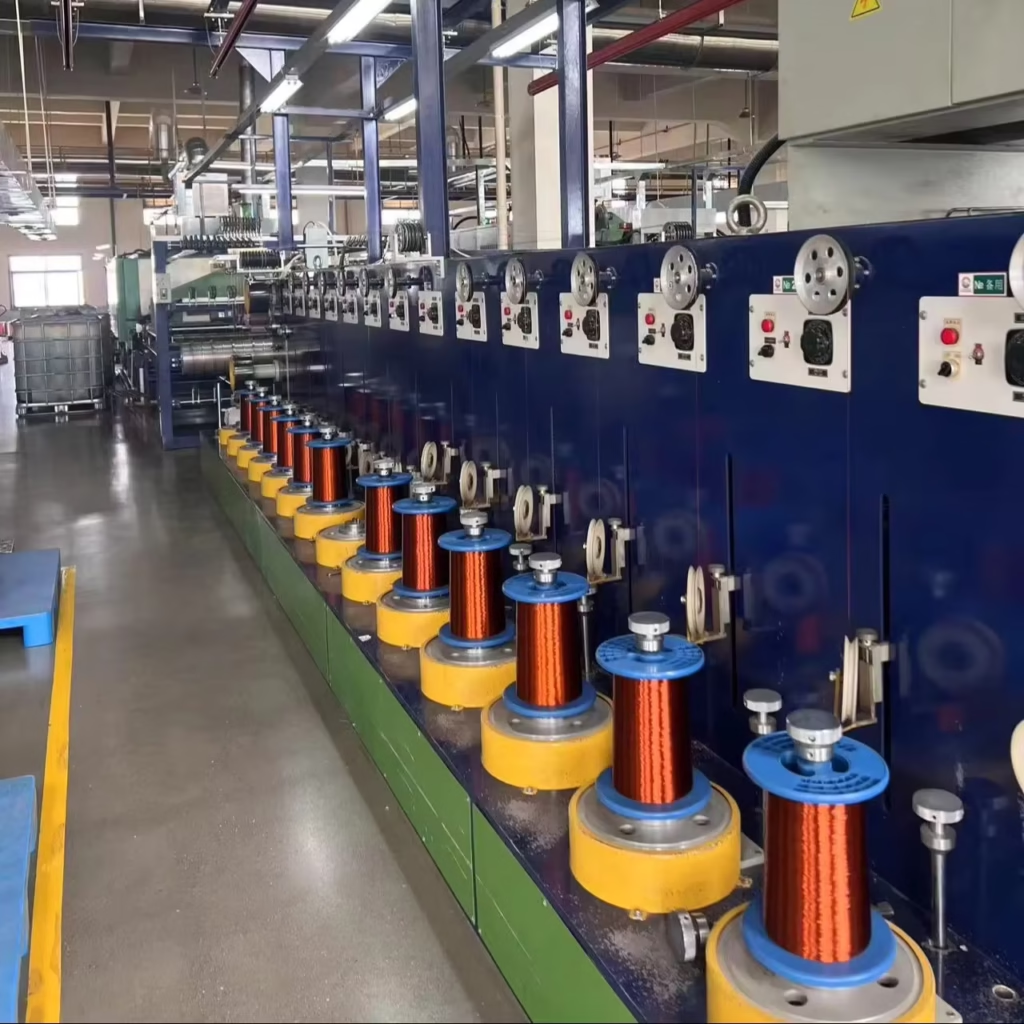
Production
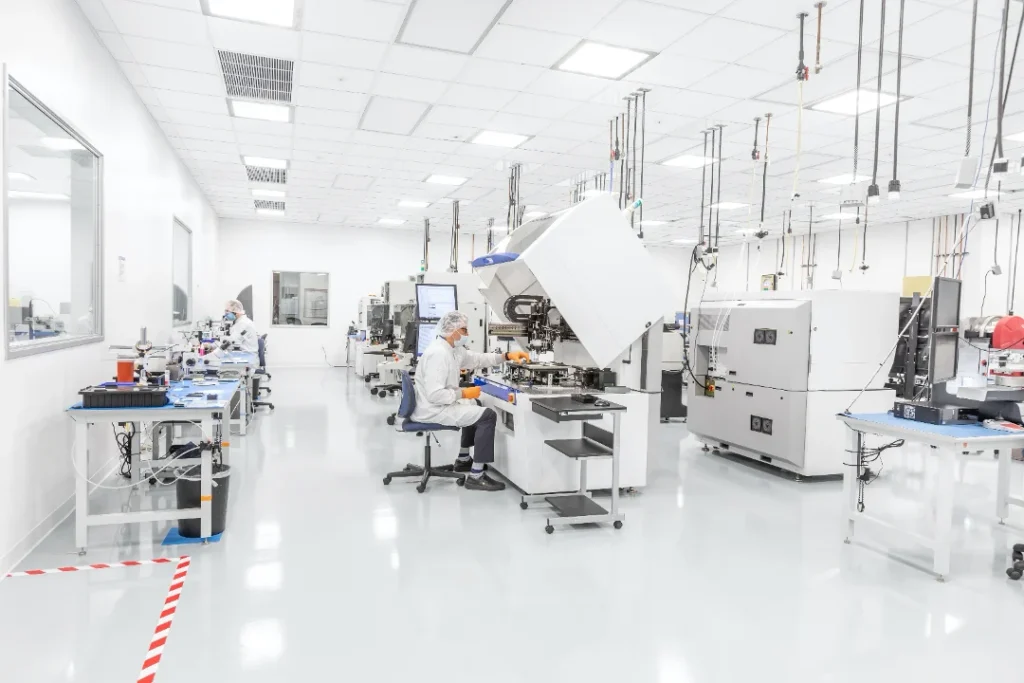
"Utilizing continuous drawing and precision in-line annealing within a Class 10,000 cleanroom, we ensure micron-level diameter tolerances and coating uniformity for high-volume, high-quality production."
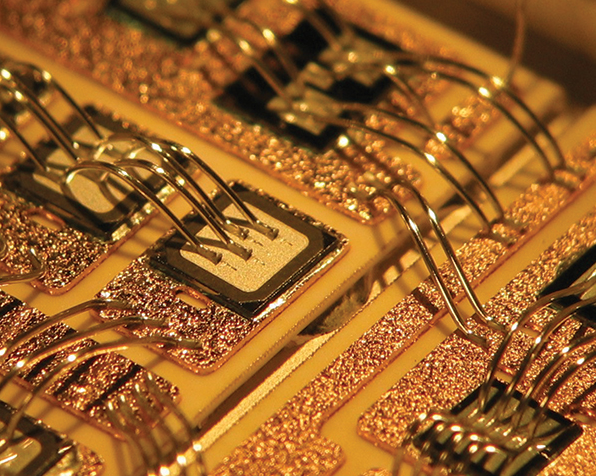
Application
"As a cornerstone for cost-efficiency in power electronics and automotive modules, our solutions leverage superior thermal and electrical conductivity to meet the demands of high-density, high-power advanced packaging."
Jinan Zunbo CNC Technology Co., Ltd.
The company has successfully obtained various domestic and international quality system certifications—including ISO9001, ISO14001, and IATF16949—and has passed all relevant product testing standards.